

Saudi Arabia’s Fashion Transformation: Admiring the Rise While Preserving Cultural Identity
 Mohammed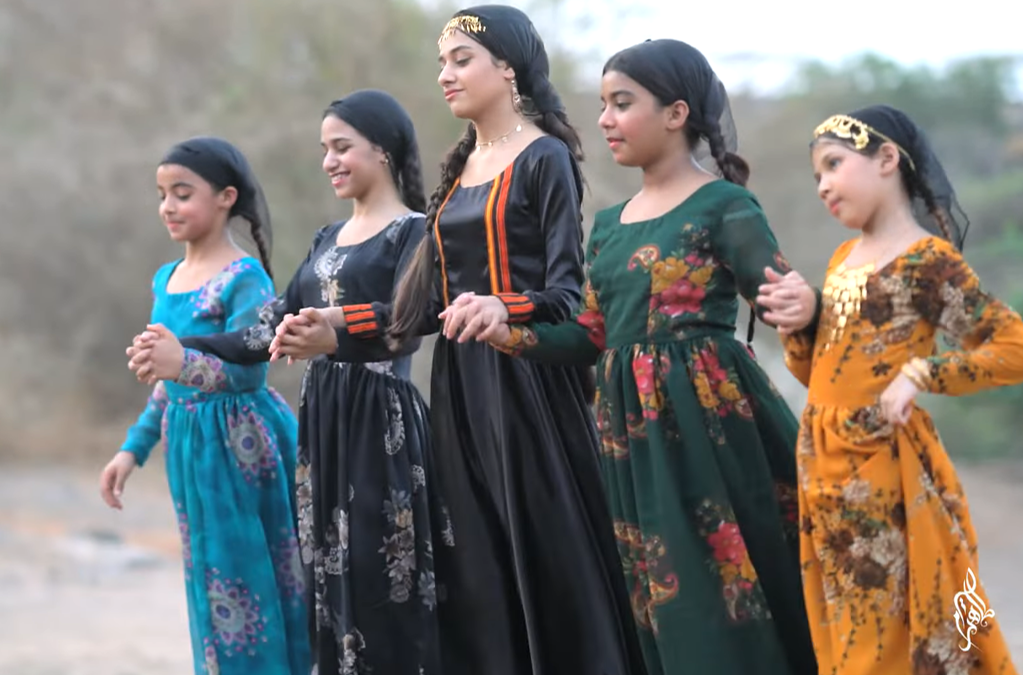
Until recently, the Saudi capital of Riyadh was hardly ever looked upon as a hotspot on the global fashion circuit. New York, Milan, and Paris have long been the mainstays for fashion weeks, where established designers and buyers gather.
However, times are changing. Gulf countries are quickly becoming new hubs for the industry, particularly Saudi Arabia.
Fast Facts: Market Growth
Retail demand for fashion products in Saudi Arabia is forecast to increase by 48% to reach $32 billion in 2025. Additionally, the luxury field is set to enjoy a 19% growth.
Riyadh Fashion Week: A New Era
With the first-ever Riyadh Fashion Week underway (Oct. 20–23), Saudi designers are coming into the spotlight on the catwalk in their own capital. Consequently, this event serves as one of several key initiatives by the Fashion Commission.
Marriam Mossalli, founder of Niche Arabia, commented on this shift. She noted that while fashion retail has always been attractive for women in Saudi, the ecosystem was previously local.

Mossalli stated: “Today, however, the appeal is global. With social media and e-commerce, the potential for many designers has grown exponentially as it’s not limited to their local market.”
Government Support and Vision 2030
The attention being paid to the industry signals the government’s belief in the sector’s potential. Moreover, this shift has not happened by chance; the fashion industry has been identified as a key avenue for economic diversification under Vision 2030.
Under the Fashion Commission, a plethora of initiatives are being implemented to grow the sector both publicly and privately.
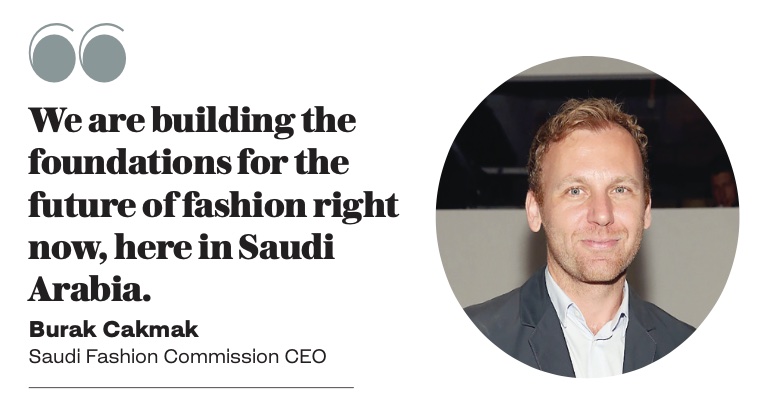
In the commission’s 2023 report, CEO Burak Cakmak emphasized: “We are building the foundations for the future of fashion right now, here in Saudi Arabia.”
Workforce and Economic Impact
The report highlights how the Kingdom’s youth are putting the country on the global stage. Based on that, the statistics reveal a robust ecosystem:
- The fashion ecosystem contributes to 1.8% of the total Saudi workforce (230,000 people).
- There is a 52% female participation rate in the workforce.
- The sector boasts 66% Saudization within core fashion jobs.
In 2021, the industry spent $7.3 billion on imported goods, showcasing the massive potential for fostering domestic capabilities to retain this revenue.
The Role of the Private Sector: Chalhoub Group
The market is also growing due to external players. For instance, the Dubai-based Chalhoub Group has increasingly been doing business in the Kingdom.

Jasmina Banda, Chief Strategy Officer at Chalhoub Group, notes that Saudi Arabia is their second-largest market. She highlights that Saudi consumers are well-traveled and trend-savvy.
Banda explained: “That is further shifting with the socio-demographic changes in Saudi Arabia, stemming from female empowerment and increasing workforce participation.”
She added that marketing is now tailored to be ‘glocal’, addressing local preferences for silhouettes, colors, and seasons like Ramadan.
Future Outlook: Localization and Education
Finally, the Fashion Commission’s report states that major opportunities lie within the nascent domestic fashion industry. Rajaa Moumena, a board member of the fashion association, believes the industry is in the early awareness phase.

Moumena emphasized that a primary focus of Vision 2030 is reducing reliance on imports. This involves producing everything from ready-to-wear to haute couture locally.
As a result, education is key. Updating curricula to provide practical skills will open doors to many jobs. By encouraging Saudi youth to be creative and business-savvy, Riyadh may soon become a permanent fixture on the global fashion calendar.